Home

IranAvenue@babak

Echoes of Childhood

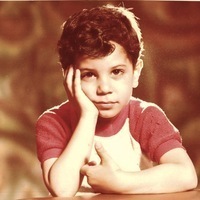
The upper concourse of Washington Dulles Airport. Dimly lit, the seats nearly empty. A man and a woman - Indian I believe - sit in a corner, quietly whispering to one another. A woman veiled from head to toe speaks on her mobile phone with a heavy Arabic accent. Mom is giving her usual motherly advice before she goes, trying to convince me to leave soon since saying goodbye is so hard for her. She went through the trouble of bringing me bread and snacks, yet I lack even a single hour for our mother - and - son talks. I show the old photographs on my iPhone, and together we drift back to the old days. Deep in my heart, I wish the clock would simply freeze; that I had never grown up, and that I would never have to witness the passage of time etched into the lines of her beautiful face.

Translated from Farsi
Reply Open
IranAvenue@babak

316

Payman Haghani’s 316 is a truly unconventional piece of cinema. It’s a movie that both has actors and doesn’t. Instead of faces, everything unfolds from the perspective of shoes and feet. As the director himself puts it, “Shoes are simply a pretext for telling a story.”

Have you ever thought about how many shoes you’ve owned since you were born? These words are spoken by a woman narrating the story of her life alongside the characters in it. She is an ordinary woman with 315 pairs of shoes, each carrying its own unique memory. And yet, there is the 316th pair, which Payman Haghani says “carries a deep sense of nostalgia, represents the protagonist’s entire life, and is the name of the film!”

Translated from Farsi
Movie Trailer

Reply Open
IranAvenue@babak

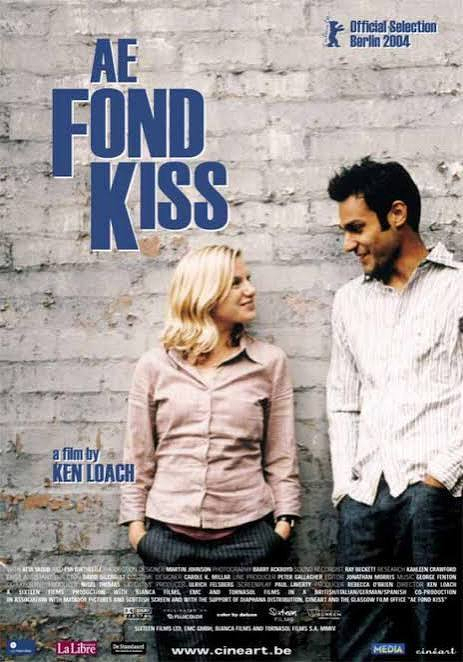
Ae Fond Kiss

I rewatched Ae Fond Kiss recently for the first time since it came out back in 2004. I was very young then and didn’t have much life experience. There is something really special about repeating certain experiences, like rewatching movies or rereading books from a long time ago. Now that I have gone through life and seen more, a lot of things in the film really resonate with me, and the story just sits with me. You realize how much your worldview and tastes have evolved. I really love the Scottish accents in the movie now, which is something I just didn’t connect with back then. The film tells a love story between Casim, a second-generation Pakistani Muslim young man from a deeply conservative family, and Roisin, an Irish Catholic immigrant and schoolteacher in Glasgow, and what the society imposes on their lives through both strict Catholic rules and Muslim traditions.

(Translated from Farsi) Image: Official Benelux theatrical poster for Ae Fond Kiss (2004), distributed by Cinéart.

Reply Open
IranAvenue@babak

Our Little Sister

Our Little Sister is a Japanese melodrama that tells the story of a family’s joys and sorrows. Sachi, Chika, and Yoshiro are three sisters living in their childhood home in the city of Kamakura. Fifteen years ago, their father left home for another woman and moved to a small town, and their mother also left, perhaps in protest.

Their lives are settled into an everyday routine until the news of their father’s passing changes everything. When the three sisters travel to his small town for the funeral, they are confronted with a new chapter of his life: their thirteen-year-old sister, Suzu, who now has no one to take her in. Sachi, the eldest sister, feels a sense of responsibility and asks Suzu to come live with them. The arrival of their younger sister brings joy and life to the large family home, but also stirs up conflicting emotions. Their mother, who lives far away but still visits frequently, scolds Sachi for bringing the ‘mistress’s’ daughter into the house, and their aunt considers Suzu’s presence a bad omen.

However, neither the mother nor the aunt realizes that the three sisters and Suzu are each other’s missing pieces, each reflecting a different chapter of their father’s life. This becomes clear through the questions they ask one another about him. Sachi, the eldest, is the epitome of the devoted Japanese woman, dedicating her life to her sisters so they wouldn’t feel the absence of their parents. Yet, even she is not immune to the criticism of her younger sisters, who accuse her of being ‘bossy.

Originally in Farsi. Translated into English.

Watch The Trailer Here

Reply Open
IranAvenue@babak

A Moment to Yourself

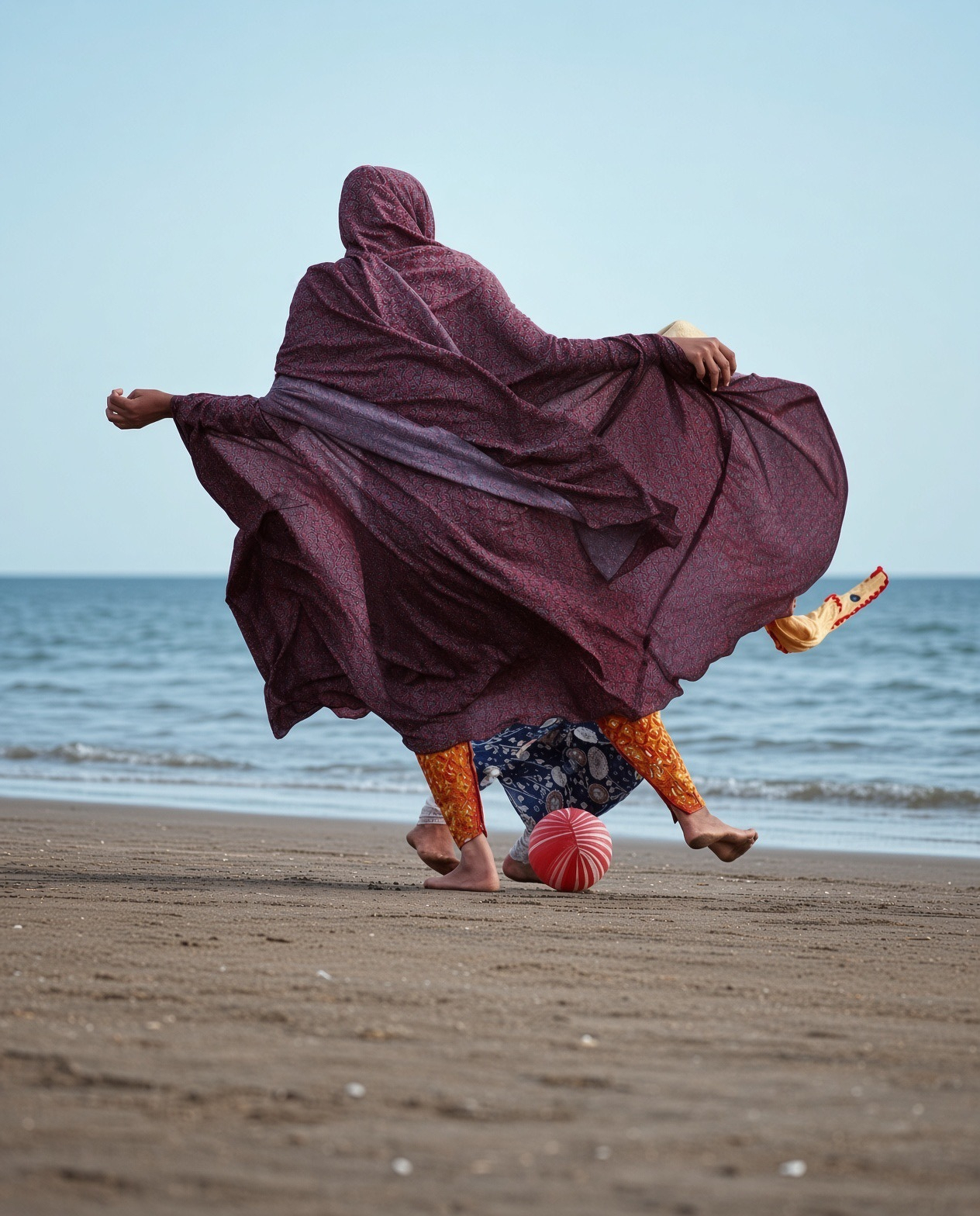
Loved this photo by Reza Nezamdoust. I don’t know when it was taken, but it shows two girls, probably in Hormuzgan Province, playing with a swirl-patterned plastic ball.

Everything about this photo is lovely to me. Hormuzgan is one of the underserved areas in Southern Iran, and life there is hard. That plastic ball is what kids — mostly boys — in the 70s–90s used to play with on dirt streets and alleys. The angulation of the camera is such that the girls’ privacy is respected. They are barefoot on the wet sand, kicking the ball, the wind catching their traditional dress like a bird with open wings. They are away from the hardship of daily life, away from everything expected of them, having a moment with the ball.

Carpe diem.

Reply Open
IranAvenue@babak

The Foot Steps Of Water

My reading today is from Sohrab Sepehri:

Life’s a pleasant tradition. Life’s wing is as vast as death.

Life’s a jump the size of love. Life’s not something, we put on the mantel of habit and forget.

It does not matter where I am. The sky is always mine. Windows, ideas, air, love, earth, all mine. Why does it matter if sometimes, the mushrooms of nostalgia grow?

Let’s take off our clothes. Water is just a foot away. Let’s have a basket and fill it up with all the greens and all the reds.

We are not to comprehend; the secret of roses, but maybe swimming in the incantation of roses. Or may be looking for the song of truth between the morning glory, and the century.

Translated by: Mahvash Shahegh

Reply Open
IranAvenue@babak

The Snows of Kilimanjaro

The Snows of Kilimanjaro, from 1952 with Gregory Peck and Ava Gardner, was based on Hemingway’s story of the same name. Hemingway never liked the adaptation, yet the movie was a success at the box office.

My favorite scene from the movie is where Harry meets Cynthia at a party where everyone is showing off and trying to look very sophisticated. Harry is taken by surprise to hear that Cynthia is simply trying to be happy. That was mesmerizing to him.

Hemingway’s father committed suicide by gun, and Hemingway always looked at that as a cowardly action by his father, whose health was deteriorating. Oddly, many years after, Hemingway went the same way and took his own life when his own health was deteriorating. What an ill twist of fate.

Reply Open
IranAvenue@babak

Good ol' Homer

I went to the City Local Theater to see Nolan’s Odyssey honestly only because of all the comments, thoughts, and controversy going around his production. While It isn’t my favorite adaptation of the Odyssey, I applaud Christopher Nolan for his meticulousness. The Ancient Greeks told us there are things beyond what we merely see and things we can still reach toward. So they gave us legend and mythology which warm the heart, and they gave us philosophy which nourishes thought. Among the different film versions, I still prefer Troy (2004) because it leans into the philosophical side of ancient Greece rather than the mythological. A very personal choice. And besides: who could have performed better than that cast? Who could have bettered the late Peter O’Toole as King Priam? Who could have out-acted Brian Cox as Agamemnon? My favorite scene: “There are no pacts between lions and men”

Reply Open
IranAvenue@babak

Reflection on the past...

It is humbling to realize that what shapes your life years from now, may be the most simple decision you made on an ordinary day.

Reply Open
IranAvenue@babak

Instant Karma!

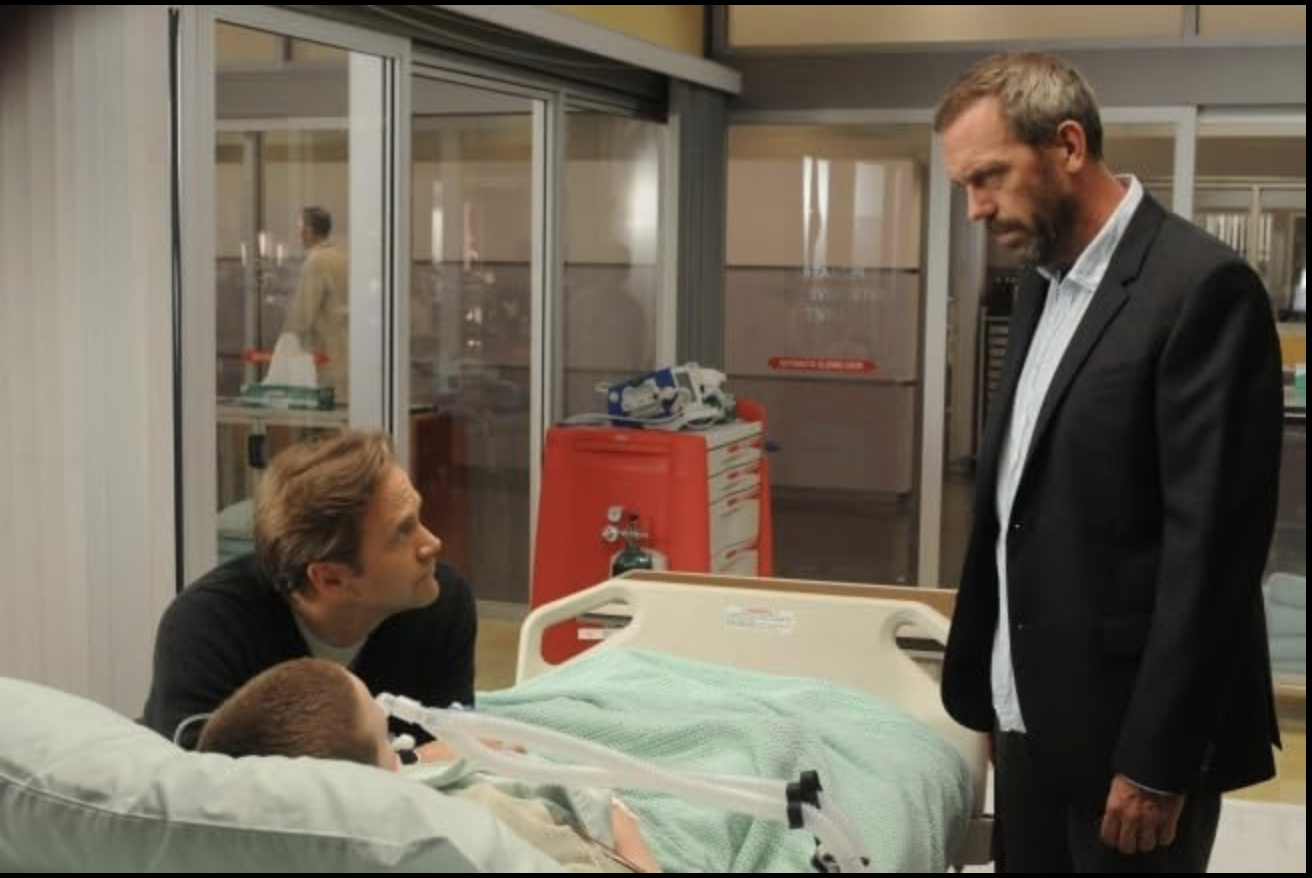
Out of every House episode, this one is my favorite. Randall is a billionaire. His teenage son Jack is sick. Bad stomach pain, weird symptoms, and no one can figure out what is wrong. Randall has this belief that life is a zero-sum game. He thinks he has been too lucky in business, and now the universe is evening things out by taking his son. So he tries to flip his luck. He calls in his lawyers and starts signing everything away. His companies, his stock, his properties. In a few hours, he goes from billionaire to broke. The idea is simple: if he is poor and miserable, the universe has no reason to punish him anymore. House ends up saving Jack. And Randall is sure his plan worked. To him, karma shifted the second he lost everything.

Reply Open
IranAvenue@babak

The Comforting Indifference of Nature

“Meanwhile the world goes on. Meanwhile the sun and the clear pebbles of the rain are moving across the landscapes, over the prairies and the deep trees, the mountains and the rivers. Meanwhile the wild geese, high in the clean blue air, are heading home again.”

— “Wild Geese” by Mary Oliver

Reply Open
IranAvenue@babak

Bronstein

I always disliked anything ending in “-ism” especially communism. Having studied and witnessed what it brought to the countries that adopted it. Even so, we cannot ignore its impact on history, nor that of the October 1917 Russian Revolution, which brought down the Romanovs after 300 years of rule. And yet, among the Bolshevik revolutionaries, there was one figure who mesmerized me: Trotsky. Among the leaders of the Russian Revolution, Trotsky undoubtedly holds a special place. A formidable orator and writer and the founder of the Red Army, he played a key role in both the victory of the Russian Revolution and its consolidation of power. But it was his tragic fate that always drew me to him, and I have long sought an answer to one question: how was Stalin able to take the man who, after Lenin, was the number two figure on the Central Committee of the Communist Party, brand him a great traitor and erase his name from the history of the revolution for years? In the book introduction of The Prophet Armed, the historian Isaac Deutscher writes that for nearly thirty years the powerful propaganda machines of Stalinism worked furiously to expunge Trotsky’s name from the history of the revolution , or to leave it there only as a synonym for traitor. “To the present Russian generation, Trotsky’s life story has already become like an ancient Egyptian sepulchre once known to have held the body of a great man and the record of his deeds engraved in gold, yet so plundered by tomb robbers and ghouls that nothing of what it contained can be found.” In November 2017, in an interesting gesture marking the 100 years of the revolution, Russian state television aired an eight-part mini series titled Trotsky which used to be available on Netflix with English subtitles. For someone like me, who has always admired the character of Lev Davidovich Bronstein, the series was a gift. The storyline takes considerable liberties with historical accuracy, but the production quality is excellent. The story opens in Mexico, in the last days of Trotsky’s life, with a superb performance by Konstantin Khabensky. Lev Bronstein is living in exile with his wife, Natalia. Ramon Mercader, an undercover agent of the Soviet secret police, has befriended Trotsky’s secretary so that, at the right moment, he can assassinate the old revolutionary. Under the pretext of an interview, he gains access to Bronstein. During these conversations, Mercader seemingly captivated, or perhaps intimidated, by Trotsky leads the viewer through a series of flashbacks: Trotsky’s youth, his time in prison, his exile in Europe, the Russian Revolution, the founding of the Red Army, the civil war, and his personal and romantic life.

Watch the series trailer here: www.youtube.com/watch

Reply Open
IranAvenue@babak

Kara-Burgut

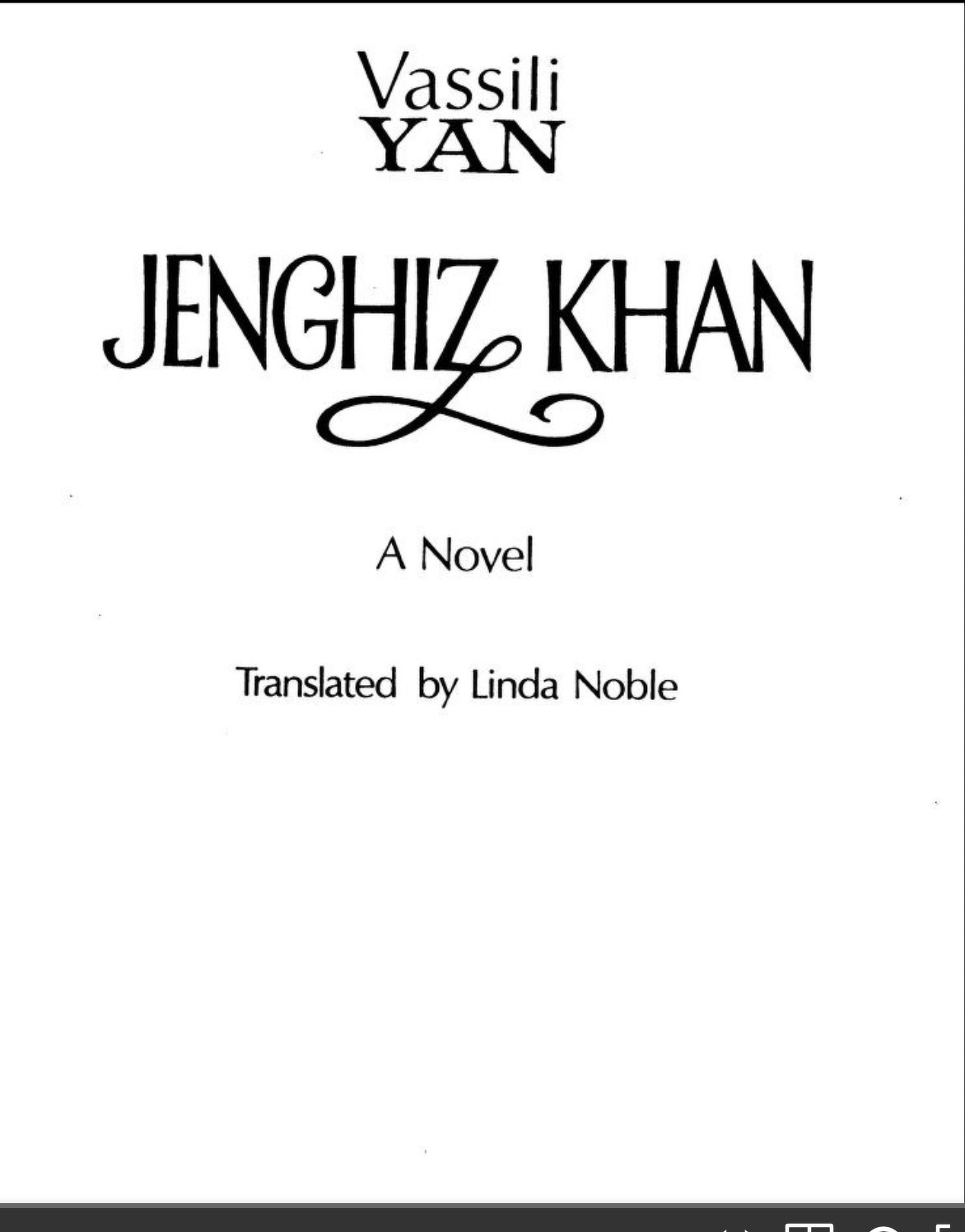
Closing my eyes; going back to when I was 15 and picked up this book from my grandfather’s library. It opened an entirely new chapter for me the stories of great Central Asia. This is forever my favorite part of the book, and I keep envisioning it as a movie. I might just one day prompt it to video using Veo 3 :)

……The jigit with the round eyes picked up one of the books, turned it over in his hands, flipped the first few pages and said, “These are probably the hadiths and precepts which the fat, long-bearded imams stuff into the heads of their scrawny starving pupils!”

“No, glorious warrior,” replied Haji Rakhim. “This book is about the great Iskender, conqueror of the universe.”

The black horseman placed the book in its yellow leather binding on the rug before him and said, “In a short while the morning star will come out. There is no need to hurry with the execution of this servant of the infidels. Why not listen to this wanderer? Let him tell of the feats of some brave warrior.”

“Let him speak!” sounded some voices. “Sometimes a nightingale in a cage sings better than one in the wild.”

“Then listen,” Haji Rakhim began. “I shall tell you not of Iskender the Great, nor of Rustem and Zorab, but of the famous bandit of the desert Kara-Burgut and the Turkmen maiden Gyul-Jamal…”

Upon hearing the name Gyul-Jamal the chief of the band threw a quick glance at the dervish and his brows went up in surprise. He lay down on his right side, resting his cheek on the palm of his hand, and with burning black eyes stared intently at the bound story-teller.

Yan, V. (n.d.). Jenghiz Khan: A novel (L. Noble, Trans.). Raduga Publishers.

Reply Open
IranAvenue@babak

Evening Contemplation 10

Father Zosima is one of my favorite characters in Fyodor Dostoevsky’s novel The Brothers Karamazov. He serves as the spiritual mentor to Alyosha Karamazov who is the youngest brother and the novel’s moral center. Zosima’s teachings stand in direct contrast to the doubtful, intellectual rebellious and nihilism of Ivan Karamazov the other brother. In my humble opinion Dostoevsky reflects the constant conflict forces that exist within an intellectual on whether to submit or to question. Here is my favorite part from book six of the novel called The Russian Monk:

“From the house of my childhood I have brought nothing but precious memories, for there are no memories more precious than those of early childhood in one’s first home. And that is almost always so if there is any love and harmony in the family at all. Indeed, precious memories may remain even of a bad home, if only the heart knows how to find what is precious.”

Reply Open
IranAvenue@babak

Firəngiz

I came across this old Azerbaijani movie and fell in love with this one scene. The filmmaker used an alternating camera technique of down-to-up and up-to-down camera angles to create an intense dynamic tension between the two characters, followed by the handheld camera giving the scene a raw, shaky and intimate feel which really drew me into the story.

Reply Open
IranAvenue@babak

The Foot Steps Of Water

Life’s a pleasant tradition.
Life’s wing is as vast as death.
Life’s a jump the size of love.
Life’s not something,
we put on the mantel of habit
and forget.

Reply Open
IranAvenue@babak

Evening Contemplation 9

I am reading James Legge’s translation of the Tao Te Ching Chapter 16.1 an ode to the power of non-forced, unhurried being. A true effectiveness comes not from pushing or striving, but from moving in harmony with life’s natural flow. Here is the text:

“The (state of) vacancy should be brought to the utmost degree, and that of stillness guarded with unwearying vigour. All things alike go through their processes of activity, and (then) we see them return (to their original state). When things (in the vegetable world) have displayed their luxuriant growth, we see each of them return to its root. This returning to their root is what we call the state of stillness; and that stillness may be called a reporting that they have fulfilled their appointed end. "

As I was reflecting, I remembered Jet Li’s movie Fearless, specifically the scene where he plants rice seedlings. He learned that the seedlings need to be planted with space, and that each one thrives only when it is not crowded by other seedlings. He also learned that relationships flourish when individuals give each other breathing room and respect.

Reply Open
IranAvenue@babak

La Vita è Bella

I am joyful today as I read and contemplate this tanka by Ariwara no Narihira :)

I have always known
That at last I would
Take this road, but yesterday
I did not know that it would be today.

Reply Open
IranAvenue@babak

Carpe Diem!

Rest in peace, Robin Williams. We don’t read and write poetry because it’s cute; we do so because we are members of the human race. And as much as we need medicine and science to keep us alive and sustain our existence, we also need poetry to say, “I’m here. I feel. I matter.” We are story tellers and that has kept us alive as members of human race. I can watch this movie over and over again. It’s an ode to life, but most importantly, it emphasizes how vital it is to have a coach, a teacher, a mentor to shape your life because if you don’t have one, you are condemned to a wasted life.

Reply Open
IranAvenue@babak

Three Billboards Outside Ebbing, Missouri

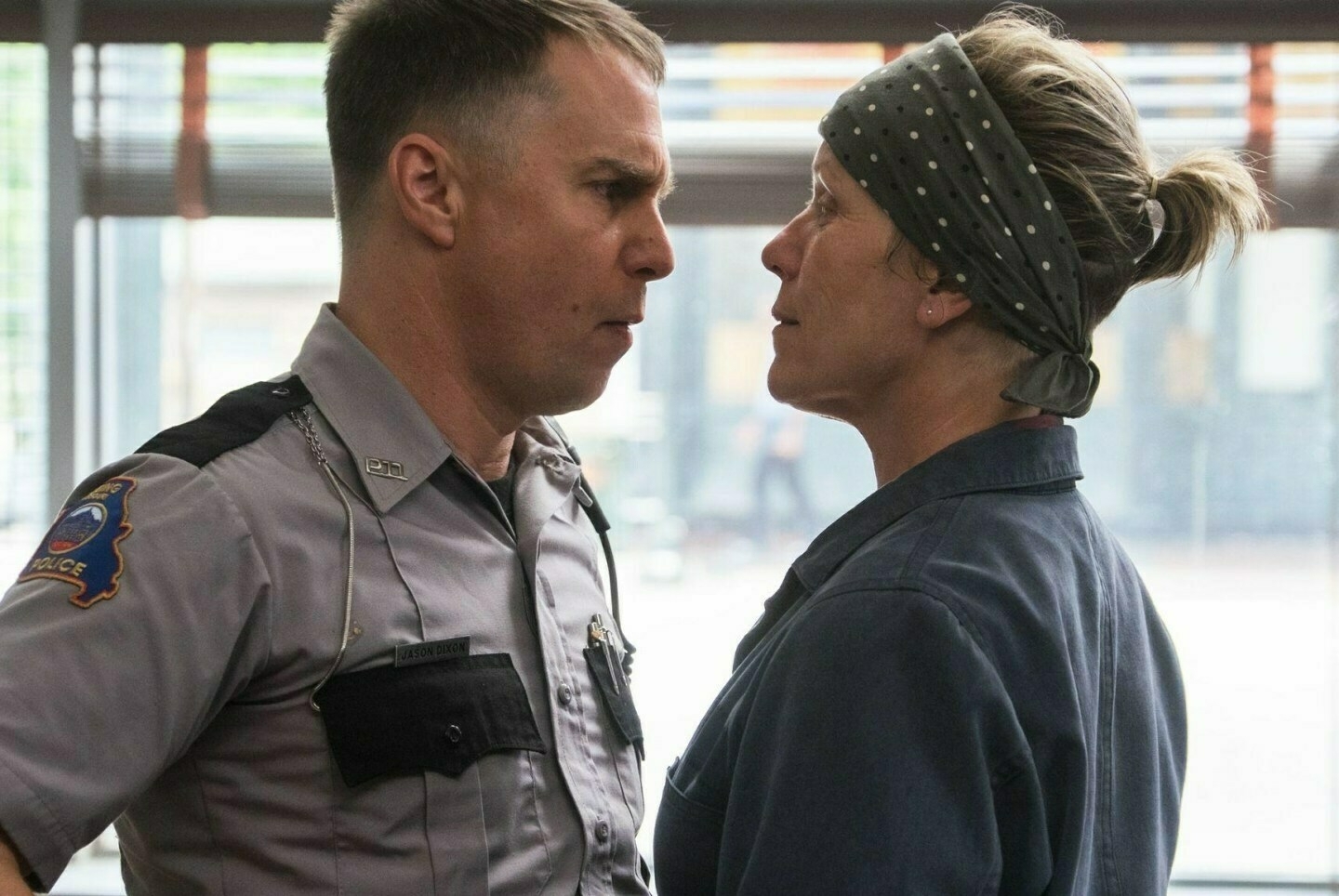
How did I even miss this movie when it came out? What a powerhouse performance! McDonagh wrote the role of Mildred Hayes with Frances McDormand in mind and the role of Jason Dixon with Sam Rockwell in mind.

Reply Open
IranAvenue@babak

The Burden of Responsibility

The more life experience we gain, the richer books and movies become after we revisit them. One of my favorite animations in that context is Prince of Egypt, which I watched again last night.

In the opening scene, brothers Rameses and Moses race through Pharaoh’s Grand Temple in a reckless chariot race. They destroy scaffolding and sow chaos among the workers.

In the very next scene, the two young princes are in the royal court. Pharaoh Seti is furious and confronts his sons. Moses steps forward and takes the blame, saying that he goaded Rameses into the race and the responsibility is his. Pharaoh shifts to Rameses asking what he knows of responsibility and then goes on to say how they ridiculed the traditions of Egypt as royal princes by their reckless behavior. Rameses, surprised by his father’s fury, asks that the destruction of a temple—or a bunch of scaffolding—what harm could it do to Egypt’s traditions? Pharaoh has an outburst and accuses Rameses of being a weak link in the chain that could bring down the dynasty. After Rameses is given permission to leave, there comes a golden dialogue between Moses and Pharaoh.

This conversation takes place in an amazing long shot of the ancient city of Memphis in the background through the Pharaoh’s court, along with Hans Zimmer’s haunting track, “The Reprimand,” which is my favorite.

Then Pharaoh tells Moses why he is so hard on Rameses. as heir, Rameses bears greater roles and responsibilities. He is to become the morning and the evening star after Pharaoh dies, and he must not be led astray by anything, even by his brother Moses. It is a gentle reminder that the bigger roles we have in life, the more responsible we are; the more understanding and the more mentally capable we become, the greater our responsibilities become. Pharaoh’s emphasis was that Moses may have to worry less, therefore his responsibilities are lighter than Rameses’s.

I was thinking this rule even could be generalized to saying that the more dear a person is to you, the more responsibility you bear toward them and they toward you That is why family feuds become so painful and prolonged because you do not expect to be wronged by your beloved ones.

Reply Open
IranAvenue@babak

Moment of enlightenment

Today, I was extremely happy while gathering with friends to mark the end of Norooz celebration. A memory from the past suddenly resurfaced, reminding me of how I was saved from the perils that would have led me to perish. In that moment, I felt a profound sense of enlightenment and after so many years, I remembered these words:

“Surely, We had shown you favor before. We saved you from sorrow, as well as other tests We put you through.”

The hand that protects me and watches over me has not given up on me yet.

Reply Open
IranAvenue@babak

Happeist moment of life

“In fact no one recognizes the happiest moment of their lives as they are living it. It may well be that, in a moment of joy, one might sincerely believe that they are living that golden instant “now,” even having lived such a moment before, but whatever they say, in one part of their hearts they still believe in the certainty of a happier moment to come.”

Orhan Pamuk

Reply Open
IranAvenue@babak

Evening Contemplation 8

When we blow out the sacred flame in a temple, we cast our own impurities onto what symbolizes the Buddha’s wisdom and clarity. Therefore, it’s best to extinguish it gently—out of respect and mindfulness—rather than use our breath.

Reply Open
IranAvenue@babak

We begin with roots

Root is a concept I have been thinking and writing about a lot lately. In my opinion, it represents stability, culture, identity and anything that creates a sense of balance in life. More importantly, it is what connects you to your past like a strong chain. In many martial arts styles, one of the first lessons is to develop a firm stance or “strong roots.” This grounding is crucial not just for balance and stability, but also for generating power.

Reply Open
IranAvenue@babak

Easy to Swallow, Hard to Digest

I was watching this scene from the Marco Polo series where Kublai Khan was criticized about embracing Chinese traditions in his Mongol court. It reminded me of Graham Fuller’s insight in Turkey’s New Geopolitics: “Historically, the Ottomans, and later other external powers, discovered that occupying a region was only the first step. The deeper challenge lay in truly integrating or ‘digesting’ the societies, cultures, and identities they had swallowed.”

History shows that great powers like the Mongols, Ottomans and Alexander the Great often ended up being absorbed by the cultures they conquered, from marrying into local families to proudly adopting new identities. The cultural, religious, and historical roots run deep and they almost always reassert themselves despite superpower’s best attempts at conquering people.

Reply Open
IranAvenue@babak

Satori moment

Today, I called my professor to thank him for everything he had done throughout the course. As we spoke, he became emotional and shared a Shakespearean quote : “Parting is such sweet sorrow.” In that instant, I had a satori moment of enlightenment. :)

Reply Open
IranAvenue@babak

Evening Contemplation 7

Loved this lecture by Dr. Ghomshei. Two people were watching a movie where a white horse and a black horse were racing. They decided to bet on which horse would win. One bet on the white horse, the other on the black. The white horse won. The winner hesitated to accept the winnings. When asked why he replied It doesn’t feel right to take the money, as I have seen this movie three times and knew the outcome. The other one said I have seen it five times yet I still hoped for a different ending!

Dr. Ghomshei uses this story to illustrate that we often hope for different destinies and outcomes even when the ending is predetermined. He compares this to life: we have seen this “movie” before and know what happens to those who stray from the path of righteousness. If you are unaware, read history to see what befell those who were tyrants or deviated from the right path. He emphasizes that it’s impossible for the ending to change. We have seen the cosmic movie—in the end, light prevails over darkness, and righteousness triumphs.

Reply Open
IranAvenue@babak

Mr. Marquez on my mind today

“Races condemned to one hundred years of solitude did not have a second opportunity on earth.” This quote from Marquez’s One Hundred Years of Solitude was on my mind today to write about. It is a major tension in the novel whether fate is determined by external factors such as prophecy or destiny or one’s own choices or free will. Is what we call identity something we are born with? What happens if I deny my roots? If I change my name to Johnny for example, and change the color of my skin and eyes—you know what I mean, the facade—do I really become Johnny? I have always wanted to be a buddhist monk meditating somewhere in South Asia in my dreams. If I do so, is that really going to be me? Or am I going to be rootless and fragile endlessly swept around like tumbleweeds in a desert?

Reply Open
IranAvenue@babak

Evening Contemplation 6

This scene from the movie Dances with Wolves: Just before John Dunbar’s marriage to Stands with a Fist, he shares a meaningful conversation with Wind in His Hair who was the best friend of Stands with a Fist’s late husband. Wind in His Hair mentions that he didn’t like Dunbar when they first met and confesses his own anger issues. This honest admission indicates self-awareness.

He believes that his best friend’s death was part of a greater destiny that allowed Dunbar to become part of their lives. This perspective shows a beautiful surrender to faith, accepting that some things are beyond our control.

Isn’t it beautiful? Isn’t it faith stepping into the darkness and accepting that some things are determined for us, even if we have no control over them? Wind in His Hair accepts his anger as part of who he is. By being aware of his shortcomings, he doesn’t resist them but acknowledges them openly. This acceptance doesn’t signify weakness but rather strength in recognizing and embracing his true self.

Through this acceptance, he finds closure over his best friend’s death. He understands that his friend’s passing paved the way for John Dunbar’s arrival, and this realization allows him to move forward with peace in his heart.

Reply Open
IranAvenue@babak

Evening Contemplation 5

I love this part of King Lear: Nothing will come of nothing: speak again. That’s when the king asks Cordelia, his youngest daughter to flatter him in order to receive a part of his kingdom. Cordelia simply refuses excessive flattery:

Unhappy that I am, I cannot heave My heart into my mouth I love your majesty According to my bond; no more nor less. You have begot me, bred me, loved me. I Return those duties back as are right fit, Obey you, love you, and most honour you.

Integrity is a virtue, yet in a cruel transactional world it condemns one to downfall, as it happens to Cordelia.

P.S. Akira Kurosawa’s Ran is the best adaptation of King lear in my humble opinion.

Reply Open
IranAvenue@babak

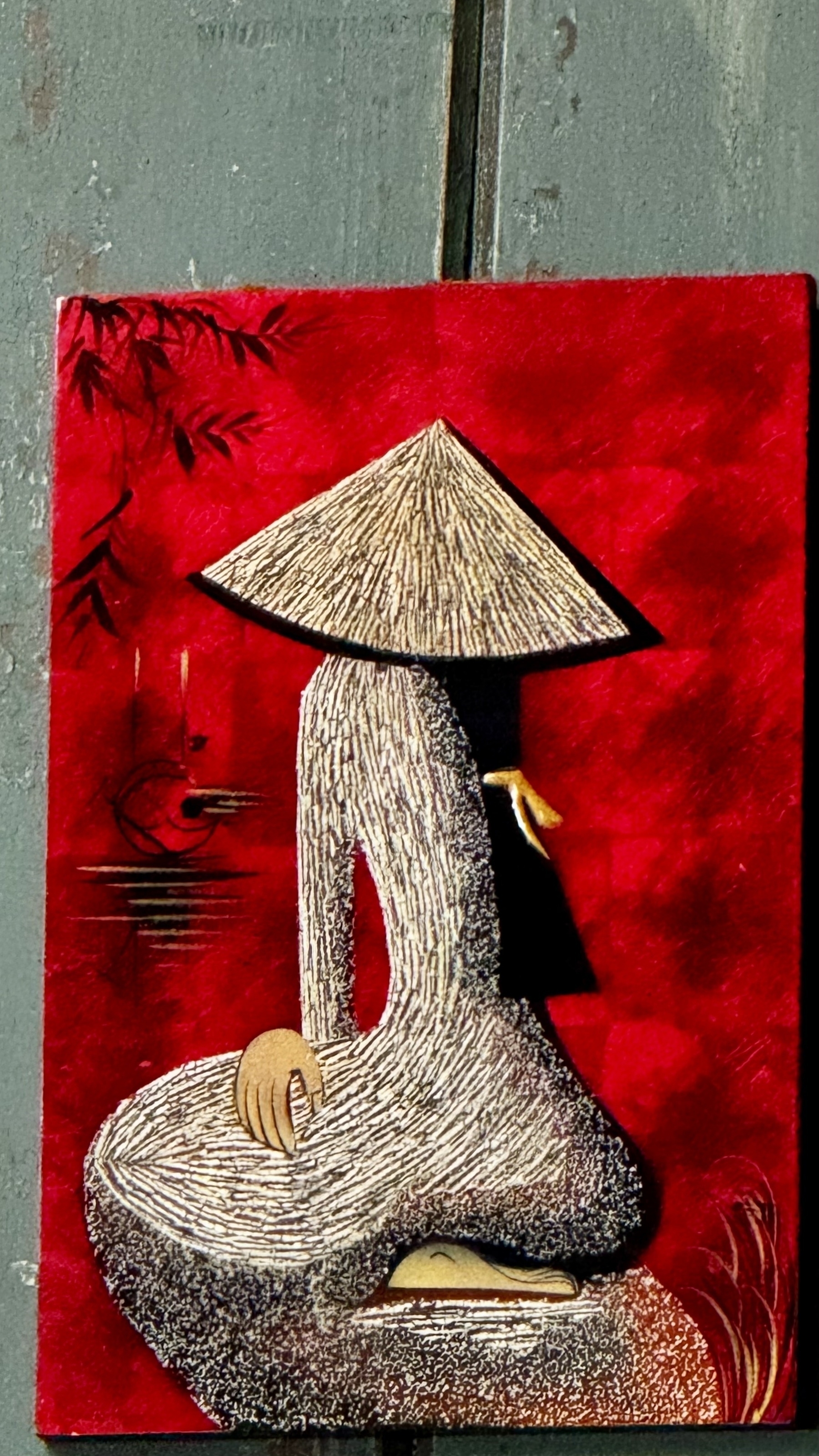
Located in a Vietnamese coffee shop: painting of a Vietnamese girl wearing a traditional hat (non la) and dress (ao dai). The painting has a certain elegance to it and I found myself staring at the artwork for a long time.

Reply Open
IranAvenue@babak

Evening Contemplation 4

O Romeo, Romeo! wherefore art thou Romeo? Deny thy father and refuse thy name; Or, if thou wilt not, be but sworn my love, And I’ll no longer be a Capulet.

The first step to love…. Deny your name.. Deny yourself..

Reply Open
IranAvenue@babak

Evening Contemplation 3

This amazing scene from Spring, Summer, Fall, Winter… reflects profound teachings rooted in Zen, focusing on compassion and the weight of karmic consequences. a young Shami (novice monk) goes around harming animals near the temple, tying stones to a snake, fish and a frog a forbidden act in Zen Buddhism to disrupt the natural order and causing suffering to the creatures.

Having seen the boy’s actions one day the master waits until the boy is asleep and then ties a stone to the his back. The master does this so the boy can feel the same burden and pain that he inflicted on the animals. The master’s intention is to teach the boy compassion, showing that harming other beings no matter how small, reveals a lack of awareness and empathy.

The powerful lesson comes when the master instructs the boy to go and relieve the animals of their pain and suffering. The master tells the shami that if the snake or fish are dead the boy will carry the weight of that stone in his heart for the rest of his life. This is a reminder of our actions and their consequences that stay with us throughout our lives. Some actions we take never truly leave us, like throwing a stone into a still pond creating ripples that continue to spread endlessly. Indeed like throwing a stone into a still pond…

Reply Open
IranAvenue@babak

Babysitting

Today, I am babysitting. An acquaintance unexpectedly asked me to take care of her little son while she took her exam and she would come to pick him up afterward. Little Arian and I went to a coffee shop. He is a curious boy, nine years old, and he tries to connect with everyone in the coffee shop and I’m trying to get him to eat his breakfast while we chat. He loves sugary food and drinks, and I’m trying to convince him not to have so much of it.

To my surprise, little Arian could keep up with all the conversations about school, food and culture. We even talked about Shahnameh, and to my surprise, he knew about some of the characters. I found that remarkable for a kid who was born and grew up here in the US.

While encouraging him to eat more protein, I tell him, “You know … not everything that tastes good is good for you.” The mischievous boy keeps smiling and saying “But it feels good!”

I was asking myself how could his mom trust me to take care of her little son? I think sometimes life doesn’t leave us with many choices. Then I remembered my own mom. Whenever she had to teach a class I recall Shiraz University’s large, beautiful campus vividly, with this huge glass kiosk in the middle. My mom used to take me to the kiosk, hand me a children’s magazine Keyhane Bacheha and ask the security guard to watch over me until she finished her class.

Now that I remember she used to do the same thing, but— and there is a huge condition here—it was always a specific guard she trusted. If that particular guard wasn’t there, my mom would take me to her classroom, have me sit in the back with the other students, while she lectured.

I don’t know how my mom’s intuition worked but the the experience today made me reflect and appreciate the trust.

:) I’m hoping to keep my integrity intact until I hand this mischievous boy back!

Reply Open
IranAvenue@babak

Moment of Reflection

One must always see big. Greatness is in the gaze, not in what one looks at.

André Gide

Reply Open
IranAvenue@babak

Love in the Era of AI and Philosophy

Spielberg produced this striking movie back in 2001, and I personally love the opening scene where Professor Hobby tries to convince the company’s board to create a robot child for childless couples. He discusses advancements in neural networks and language models, which have become complex enough to perform many tasks, including love.

Professor Hobby asks Sheila, a robot woman, “What is love?” Sheila responds by listing the physiological impacts of love on the body. This shows that in the age of artificial intelligence, where language models interpret concepts in various ways, we need a beacon—a reference point—and that could be philosophy.

disciplines like philosophy and logic will soon return to organize these concepts. What is true love? Does it include altruism? Are we talking about the philosophy of love? In some beliefs, God is seen as true love, and men and women can only see the reflection of his love through each other.

One board member then asks a moral question: if a robot child is made to love humans, can a human love the robot back? Professor Hobby responds by asking, “When God created Adam, did He create Adam to love Him?” This highlights the conundrum of love. Is love to be reciprocated? Didn’t God give Adam ability to exercise his free will to whether love him back or not? Are humans in a similar situation now? If they design robots that can love unconditionally, is it genuine love? or just simulating love?

Reply Open
IranAvenue@babak

Evening Contemplation 2

The world may never see an actress of the stature of Irene Papas. In this famous scene from the classic Antigone, she defies Creon’s edict by burying her brother, Polyneices. Unapologetic for her actions, she states the most famous quote of the act: “I was born to love, not to hate.” A reminder that the laws of heaven are above those of man.

Reply Open
IranAvenue@babak

We don’t always have the chance to see ancient texts that tell us what our ancestors were thinking. If you are curious about how people told stories around 2000 BC in Mesopotamia, you should read the Epic of Gilgamesh. It gives us a peek into what was on their minds back then. Themes like friendship and yearning for immortality. Desires that still resonate with us today.

The story is originally written on 12 clay tablets, and just take a look at how they start the first chapter:

He who saw the Deep, the country’s foundation, [Who] knew… , was wise in all matters! [Gilgamesh, who] saw the Deep, the country’s foundation, [Who] knew…., was wise in all matters!

Reply Open
IranAvenue@babak

This conversation between King Baldwin and Balian of Ibelin is a masterclass, especially for those who appreciate history. The King talks about the burden of responsibility. Even when men in positions of power are moved, one’s soul remains in his own keeping. And when you stand before God, you cannot say, “But I was told by others to do thus.” I was thinking about how many who committed atrocities throughout history, when brought to justice, claimed they were simply following orders.

In a different soundbite the King mentions that when he was 16, he won a great victory, and in that moment, he felt like he would live to be 100, but now he knows he shall not see 30. This immediately reminded me of Shah Ismail Safavi, and it’s on my mind to write about it..

Reply Open
IranAvenue@babak

A love as transformative as Boyle’s law! Pressure builds, love ignites :). My all-time favorite moment with Cuba Gooding Jr. and the beautiful Aunjanue Ellis-Taylor.

Reply Open
IranAvenue@babak

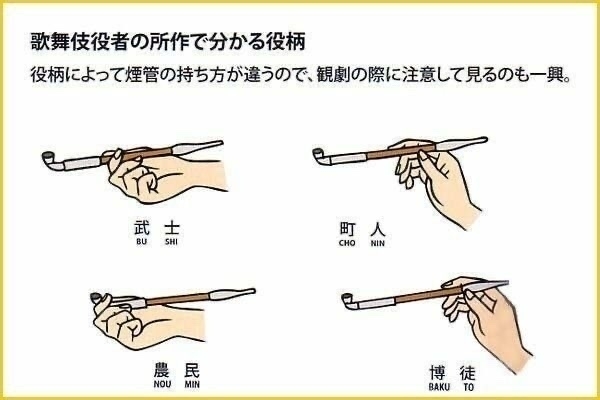
I was reading up on Kabuki and came across this interesting picture that shows the significance of how different characters hold a pipe and what is revealing about their social status. In Kabuki, every gesture is choreographed, and even the way a pipe is held carries meaning. The Warrior (top left) grips the pipe in the middle, symbolizing balance and control and reflecting his readiness for combat. The trader (top right) holds the pipe with a casual and refined grip, indicating his comfortable and leisurely life in society. The farmer (bottom left) holds the pipe tightly, showing his hardworking, grounded nature. Look! the gambler (bottom right) is holding the pipe loosely by the tail end, demonstrating a carefree, risky, and possibly arrogant attitude.

Reply Open
IranAvenue@babak

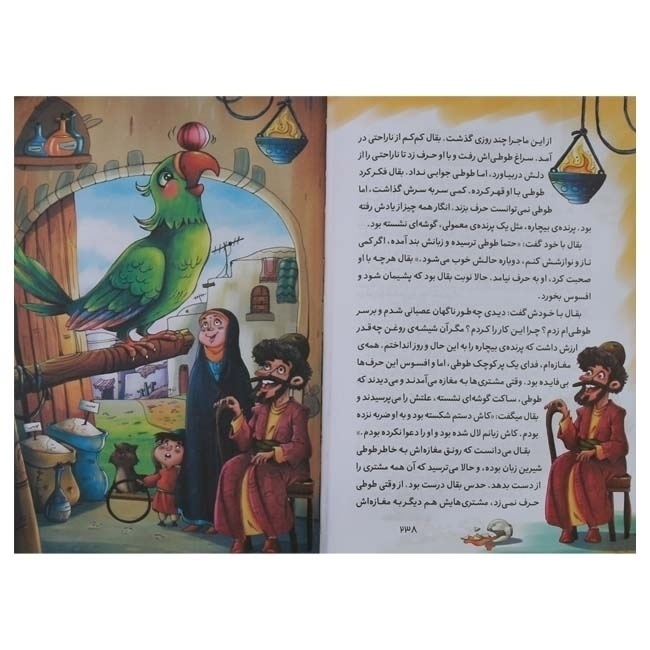
When I was a kid, I loved reading simplified stories for children based on Rumi’s poetry. My favorite stories were Moses and the Shepherd, The Merchant and the Parrot, The People Arguing Over Grapes, and The King and the Handmaiden. These stories were funny and engaging, though some in the original text for the adults felt a bit deep or even forbidden for a child.

As I grew older, I realized these stories were from Rumi’s Masnavi, a collection of poems filled with deep meanings. Rumi was clever! like a tree spreading seeds through the sweetness of its fruit, he used these stories to draw readers in, planting ideas that would reveal their full meaning as I grew older. It’s not about saying he made me wise, but he had a way of planting thoughts that grew and deepened over time.

Reply Open
IranAvenue@babak

Evening Contemplation 1

I’m reading my favorite part of Edward FitzGerald’s translation of Omar Khayyam and thinking you ill, ill twist of fate.

“The Moving Finger writes; and, having writ, Moves on: nor all thy Piety nor Wit Shall lure it back to cancel half a Line, Nor all thy Tears wash out a Word of it.”

Reply Open
IranAvenue@babak

We are the flower, thou the sun! Forgive us, if as days decline

— Emily Dickinson

beautiful Black-eyed Susans in northern Maryland.

Reply Open
IranAvenue@babak

Julius Caesar

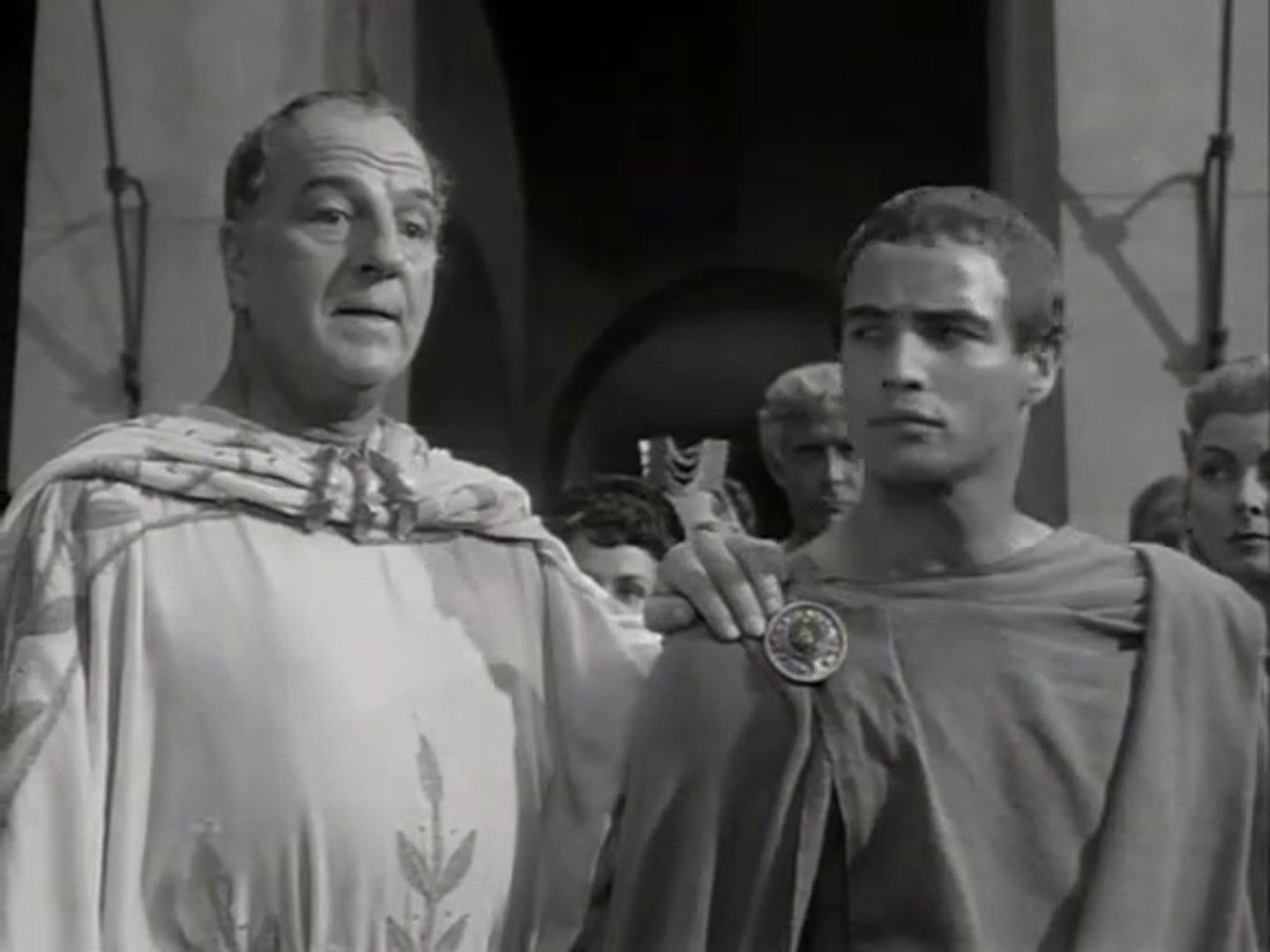
Among Shakespeare’s Julius Caesar adaptations, Joseph L. Mankiewicz’s 1953 film is a favorite of mine. Marlon Brando wrote in his autobiography, Songs My Mother Taught Me about the challenges and uncertainties he faced acting alongside great English actors like John Gielgud and James Mason. My favorite scene is where Caesar talking to Mark Antony and pointing to Cassius and says “Let me have men about me that are fat Sleek-headed men, and such as sleep o’ nights. Yond Cassius has a lean and hungry look He thinks too much such men are dangerous.

Reply Open
IranAvenue@babak

Faten :)

Omar Sharif met Faten Hamama, a well-known Egyptian actress, before he became famous worldwide for his roles in “Dr. Zhivago” and “Lawrence of Arabia.” They had a strong connection and got married becoming one of Egypt’s most popular couples. Even though their relationship ended after Sharif became a global star, he always thought of Faten with great respect and admiration.

Scene from the Movie: Struggle in the Pier (1956)

Faten: I’m not good at saying beautiful words. Beautiful words are said in the cinema (movies)

Sharief: ohh you learned about cinema too! Have you been to the cinema?

Faten: yes, I have! In the movie a girl told the boy she loved, “I wish I was a part of you.. I want to be in your heart and soul” It’s meaningless but pleasant to hear..

Reply Open
IranAvenue@babak

In Search of the Moon

The moon represents morality for me. When I look up, I always remember Albert Camus’ play Caligula. Morals guide our actions and keep us human. In Camus’ Caligula, the emperor’s obsession with the impossible—the moon—leads him to break all moral rules. By ignoring these limits, Caligula becomes a cruel tyrant, showing how losing our morals can lead to madness and destruction.

Reply Open
IranAvenue@babak

Copie Conforme

Watching this video that recently went viral on social media, it’s a behind-the-scenes moment from the movie Certified Copy with actress Juliette Binoche and director Abbas Kiarostami. Binoche looking perplexed, listening to Kiarostami as he guides her to deliver a specific line to convey a particular meaning. Kiarostami instructs her not to say the line with anger, but with reproach and disappointment.

Binoche, who seems a bit frustrated, responds, “I don’t understand this Iranian bittersweet. How could one complain without anger?” Kiarostami explains that reproach has love and affection in it; a tendency toward reconciliation and returning, while anger has a tendency to lead to breakups.

Binoche won the Best Actress award at the 2010 Cannes Festival for this role.

Reply Open
IranAvenue@babak

Nexus

Harari’s next book Nexus drops in September. I’m tempted to pre-order it, but I know I won’t have time to dive in right away. Harari argues that Homo sapiens despite being wise humans, often do self-destructive things. He suggests that our creation of AI could even lead to our downfall, which is a bold idea. While we don’t know the outcome or the path AI is taking, Harari reminds us that, historically, our inventions have made us more powerful. But with AI making its own decisions, the future might be different this time.

Reply Open
IranAvenue@babak

Agha Reza-ye Aziz :)

As I walk down Hakim Nezami Street, an older gentleman approaches me and offers some sweets. It’s a customary gesture on Thursday nights before Friday. To my surprise, he calls me by my name. I look up puzzled and ask how he recognized me.

Then, I realize he was my childhood barber who used to cut my hair. I ask him how he knew it was me after all these years. He smiles warmly and says, “I recognized your eyes.”

Reply Open
IranAvenue@babak

Amaterasu and the Mirror Trick

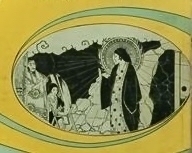
Explanation of the photo: Amaterasu, the sun goddess, got into a fight with her brother Susanoo, the storm god. She was so upset that she hid in a cave, making the world dark. The other gods decided to throw a loud party outside the cave to lure her out. They had the goddess of dawn, mirth and meditation Ame-no-Uzume hold up a mirror and dance around. Curious about the noise, Amaterasu peeked out and saw her reflection in the mirror. Tricked by this, she came out of the cave, and the sunlight came back.

Reply Open
IranAvenue@babak

Urashima Taro

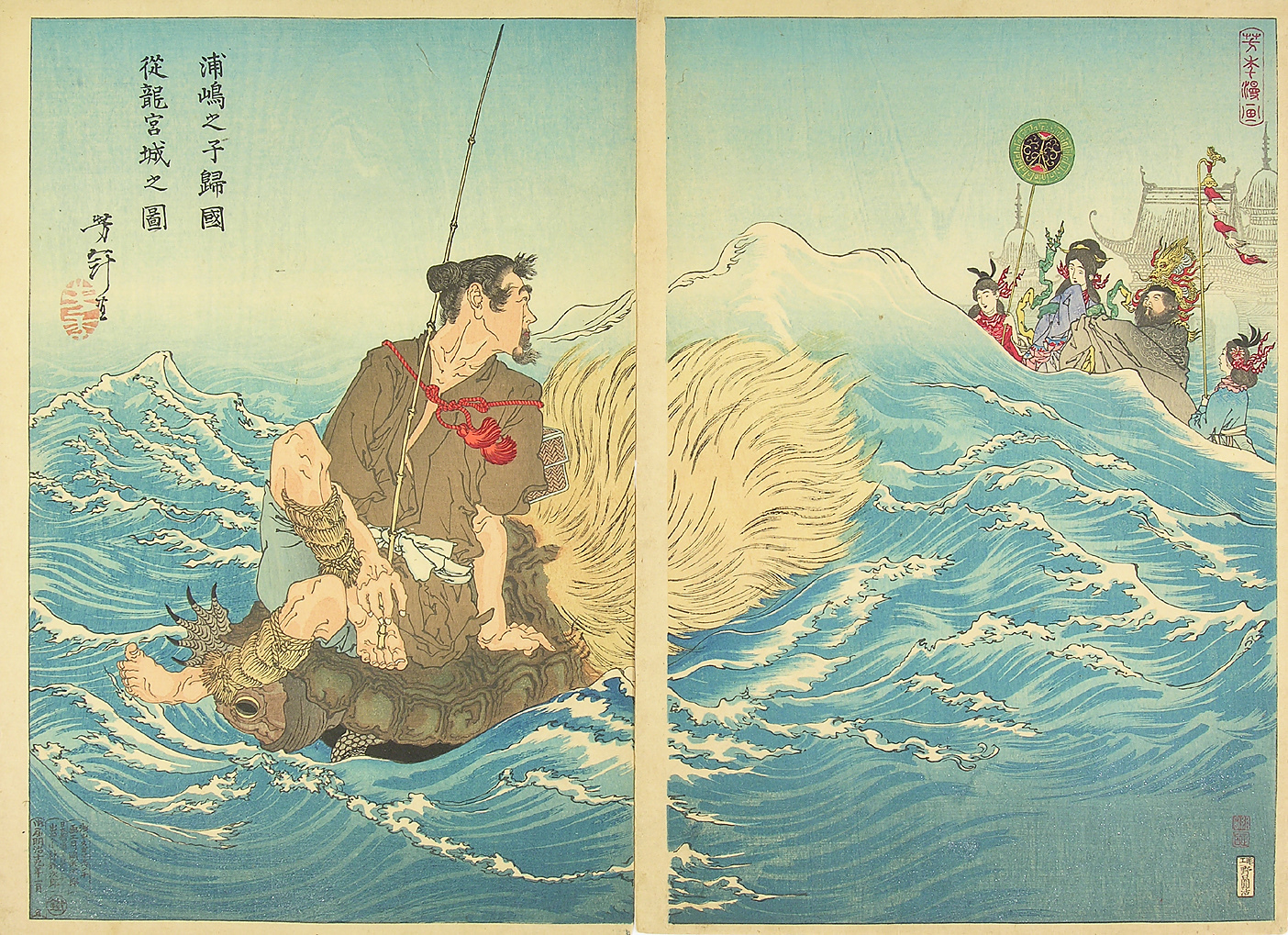
Urashima Taro is my favorite story from Japanese fairytales, especially those from the Muromachi and Edo periods. I first came across Urashima Taro as a teenager through a book called “The Soul of Japan” by Félicien Challaye. The tale of a fisherman who saves a turtle and visits an underwater palace, only to return and find centuries have passed.

Reply Open
IranAvenue@babak

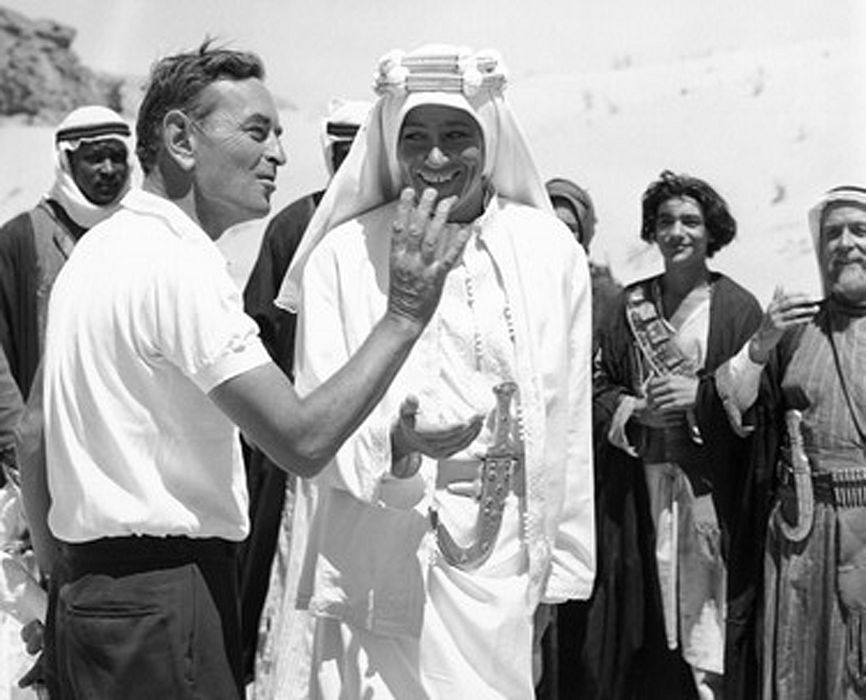
Lawrence of Arabia

Marlon Brando was first offered the iconic role of T.E. Lawrence in David Lean’s 1962 epic, “Lawrence of Arabia” but he turned it down because he didn’t want to endure the scorching heat of the Jordanian desert. This twist of fate led the role to a young and relatively unknown Peter O’Toole, who then shot to universal stardom.

Reply Open
IranAvenue@babak

Tomatos 🍅

In the middle of nowhere between Isfahan and Shiraz, we pulled over to a farmer selling his early batch of tomatoes from the back of a blue Zamyad truck. As I reached out to buy some, I heard him say to another customer “Tomatoes are anti-cancer!” The customer replied “Yeah, but they’re anti-taste too.” I did not expect to hear nutritional debates in the middle of nowhere!

Reply Open
IranAvenue@babak

Taurus Express

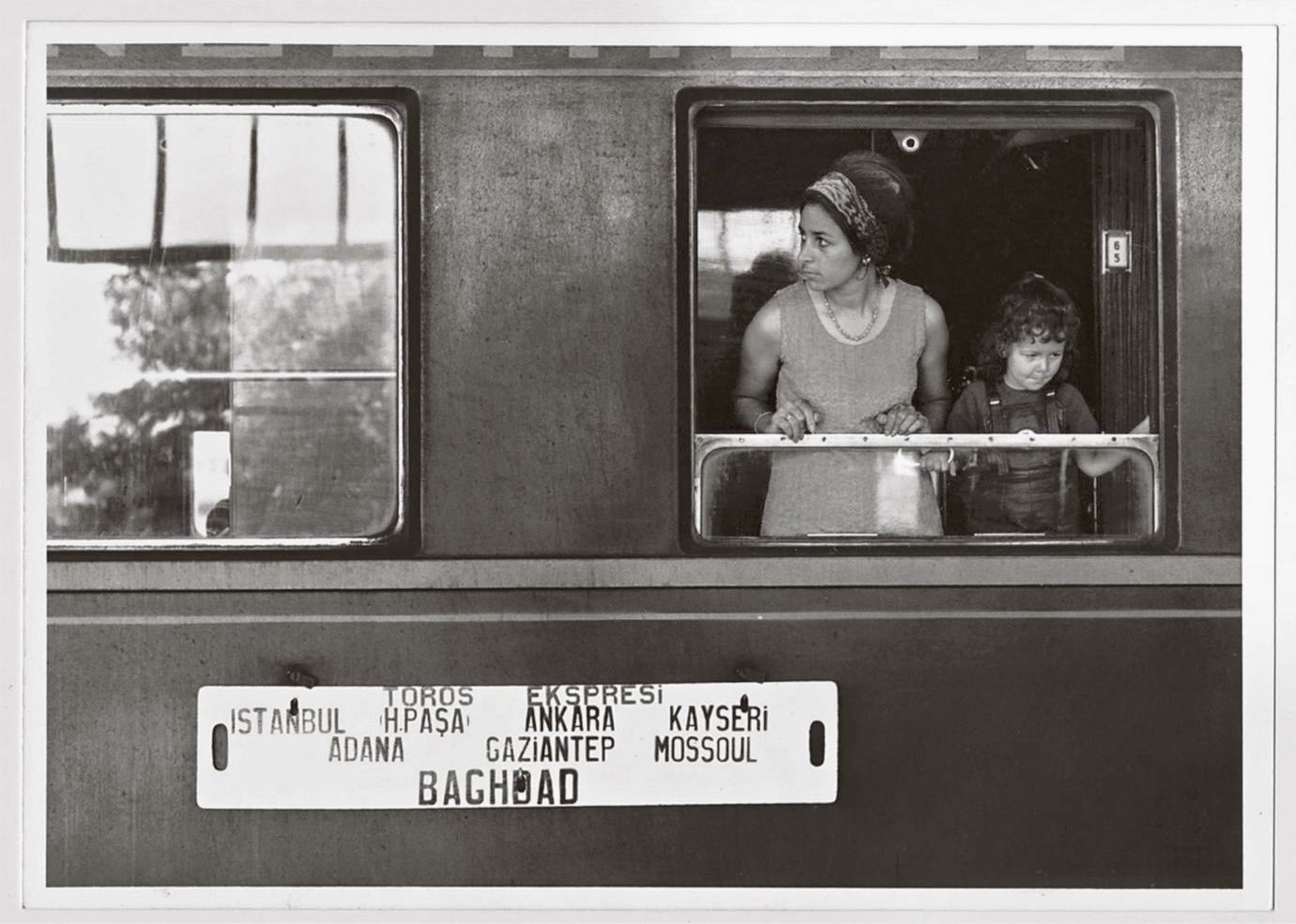
It’s not ancient history—1930. There used to be a time when you could travel with peace of mind on the Taurus-Express. Starting in Istanbul, you could journey all the way to Baghdad, visiting Ankara, Kayseri, Adana, Gaziantep, and Mosul along the way. The same express also connected to Tehran and Cairo. It’s almost hard to believe now, given the current tensions in the Middle East, but back then, these historic cities were easily accessible, each with its own rich history and charm.

Photo: Passengers on the Taurus-Express to Baghdad, 1969.

Reply Open
IranAvenue@babak

Favorite GOT scene: Arya Stark riding through the forest, finds Ed Sheeran singing around the campfire!

Reply Open
IranAvenue@babak

Koan of the Day

Twenty monks and one nun, who was named Eshun, were practicing meditation with a certain Zen master. Eshun was very pretty even though her head was shaved and her dress plain. Several monks secretly fell in love with her. One of them wrote her a love letter, insisting upon a private meeting. Eshun did not reply. The following day the master gave a lecture to the group, and when it was over, Eshun arose. Addressing the one who had written her, she said: “If you really love me so much, come and embrace me now.”

101 Zen Stories,” Nyogen Senzaki and Paul Reps.

Reply Open
IranAvenue@babak

Backgammon

I’m walking in Bustan Park one morning and see people playing chess and backgammon. It reminded me of my high school days when I used to have a pocket chess set. My friend Alireza and I would carry it everywhere. We were playing in the parks, on the bus, and sometimes even in class.

Watching them play, I couldn’t help but begin a comparison of backgammon with chess. Chess is all strategy. You make a mistake, your strategy’s wrong, you’re dead. Backgammon’s different. It is 30% or 40% skills and strategy; the rest depends on the roll of dice and your luck. Something beyond our control.

It reminded me of life. Much in the way backgammon does, life lets us free to an extent with respect to our decisions and practicing strategies. But beyond that, there are many things that we can’t control. A gentle reminder, there are events beyond our control, and we should make the best of what we can manage.

Reply Open
IranAvenue@babak

Twist of Fate

All of my life, the women around me have knitted. My grandmother did, my aunt did, my aunt still does, and so does Mom. As a child, I associated knitting with the love of the beloved women around me. This might be why I feel a connection to Madame Defarge from Charles Dickens’ A Tale of Two Cities.

Madame Defarge is the vindictive woman who, together with her husband, runs a wine shop in Paris during the French Revolution and encodes into her knitting those names doomed for the guillotine. In this way, her knitting symbolizes thorough planning and fate. I really detest Madame Defarge, full of hate and vengeance, but her knitting attracts me to her. I have a love-hate relationship with this character. Her actions revolt me, and yet I am in sympathy with her, for her destiny seems in some weird way to have become tangled up with her knitting.

In Germanic and Norse mythology, there were three strong women known as the Norns who woven destiny into the roots of Yggdrasil, the world tree. They have therefore been dubbed Urd, Verdandi, and Skuld, the Past, Present, and Future, who arbitrarily controlled the destiny of both gods and humans. This weaving represents linked and predestined destinies.

Reply Open
IranAvenue@babak

Dostoevsky’s Masterpiece

My favorite part of The Brothers Karamazov is chapter five, where Ivan explains his poem, The Grand Inquisitor. In this chapter, Ivan tells his brother Alyosha a story set in Seville, Spain during the time of the Inquisition. Christ returns to Earth, and people immediately recognize him and follow him as he heals the sick. However, the Cardinal Grand Inquisitor orders Christ to be arrested.

That night, the Grand Inquisitor visits Christ in his cell and explains why he has taken him prisoner. He argues that Christ’s return interferes with the Church’s work. The Inquisitor believes that people cannot handle the freedom Christ offers and need the Church’s guidance for security and order.

Despite the Inquisitor’s lengthy speech, Christ remains silent. At the end, Christ kisses the Inquisitor, who then decides to release him, telling him never to return. This chapter in chapter is a powerful exploration of faith, freedom, and authority.

Reply Open
IranAvenue@babak

The Khan!

I first discovered Vasily Yan (1875-1954) through my grandfather’s library. Picking up the book “Chengiz Khan”. His writing made me fall in love with Central Asia and its rich history. In 1888, Vasily Yan embarked on a journey to the ruins of ancient cities along the Black Sea. These were once energetic locations, now silent, reclaimed by nature. Yan documented with minute detail into the architecture and life of these past worlds. In his prose, vivid pictures of the past are painted. The most interesting point of Yan’s writings is in relation to his remarkable dream encounter with Chengiz Khan. In his sleep, Yan found himself on an ancient battlefield, facing the mighty Mongol leader. They wrestled in the traditional Mongol style, holding each other’s backs. At one point, Yan felt as if Chengiz Khan was breaking his spine with his immense power. In a moment of desperation, Yan decided to trick the Khan by waking up. Yan later wrote that he chose to fight the Khan awake by collecting stories and documenting the history of his reign and battles. This dream encounter became a pivotal moment in Yan’s explorations. It deepened his understanding of Chengiz Khan’s legacy and gave birth to his trilogy: “Chengiz Khan,” “Batu Khan,” and “the Last Sea.” Quite often in my postings, I shall quote from Yan’s books so that my readers can share some of his profound insights and taste his graphic expression. And through his eyes, one is able to relive Central Asia’s wonders and timeless stories.

Reply Open
IranAvenue@babak

Immortality

Legends often borrow from each other, and we can see this among different cultures. In Greek mythology, Achilles’ mother dipped him in the River Styx, holding him by his heel, which became his only weak spot. Similarly, in German legend, Siegfried bathed in dragon’s blood, but a leaf stuck to his back, leaving that spot vulnerable. His uncle Hagen later used this weakness to kill him. In Persian mythology, Isfandiyar was bathed in a magical spring, but he closed his eyes, making them his weak spot. Rustam used this knowledge given to him by Simorgh to defeat him.

It is interesting how mankind has always sought immortality. However, it often fell due to its own weaknesses.

Reply Open
IranAvenue@babak

Foxes and Hedgehogs

Isaiah Berlin uses a fragment from Archilochus, “The fox knows many things, but the hedgehog knows one big thing,” to categorize thinkers into two groups: hedgehogs, who focus on one defining idea, and foxes, who draw from diverse experiences. Berlin analyzes historical thinkers using this framework, suggesting it reveals their approaches to understanding the world.

Berlin describes Leo Tolstoy as a fox who wished to be a hedgehog, arguing this inner conflict contributed to his great literary works like War and Peace and Anna Karenina.

Reply Open